Vincent van Gogh’s The Starry Night, painted in 1889, is one of the most iconic works of art ever created. While the painting is admired for its vivid colors and swirling sky, it is also filled with symbolic elements that have intrigued art historians for generations.
Many of the objects in the painting—including the stars, the cypress tree, and the village—may represent deeper meanings about life, nature, and the universe.
In this article, we explore the symbolism found in The Starry Night and what these elements may represent.
The Stars
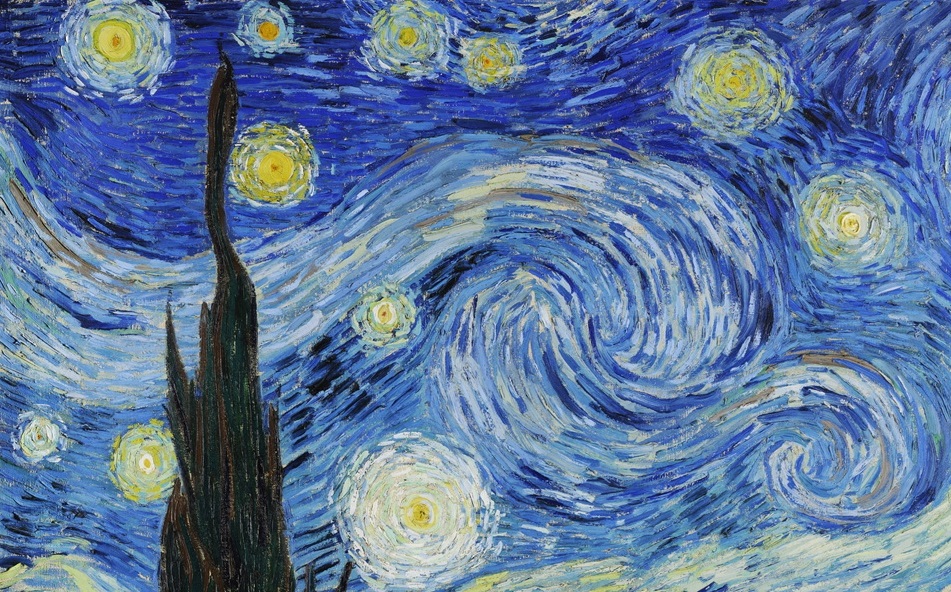
The 11 stars are one of the most striking elements in the painting. They appear unusually large and bright, radiating glowing halos of light.
Some art historians believe the stars symbolize hope and eternity. Van Gogh often wrote about his fascination with the night sky, describing how it made him think about dreams and the infinite universe.
The stars may represent something beyond the physical world—perhaps a sense of wonder or a spiritual connection to the cosmos.
The Moon
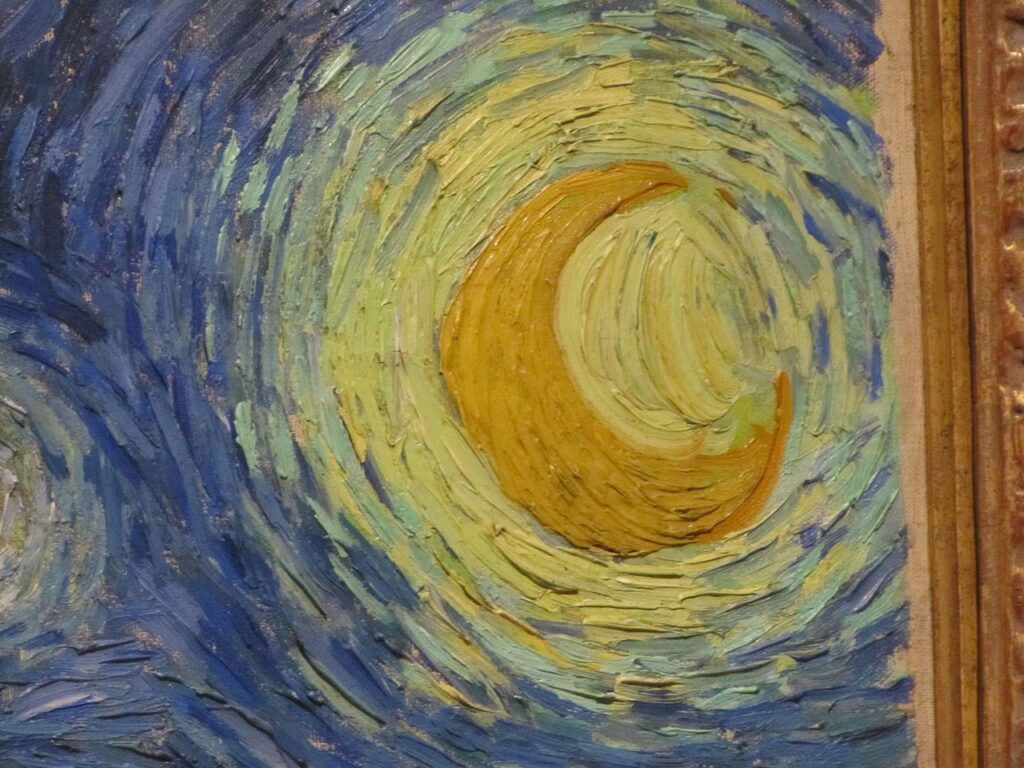
The crescent moon in The Starry Night shines brightly in the sky and adds to the dramatic atmosphere of the painting.
The moon has traditionally symbolized cycles, renewal, and mystery. In Van Gogh’s painting, it illuminates the sky and enhances the feeling that the night itself is alive with energy.
Its bright yellow color also contrasts strongly with the deep blues of the sky, creating a powerful visual effect.
The Cypress Tree
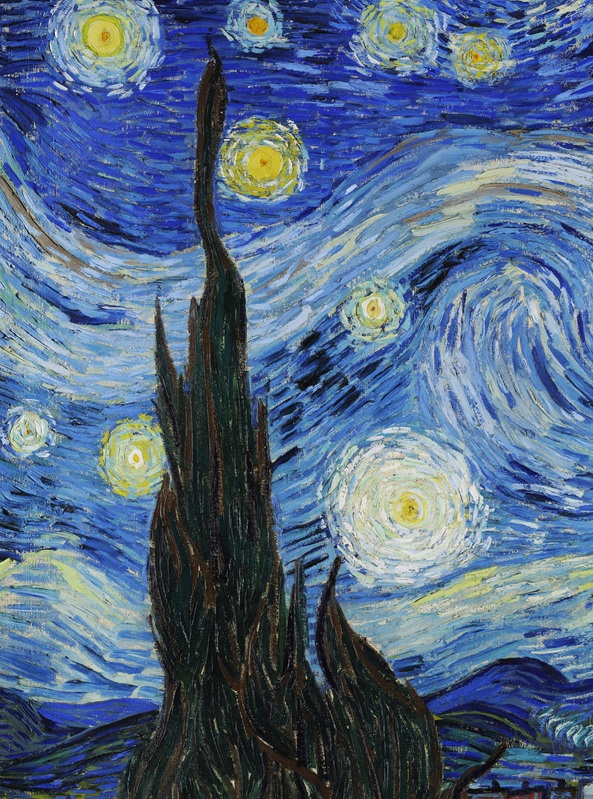
The large cypress tree in the foreground is one of the most distinctive features of the painting. It rises sharply upward, almost like a flame reaching into the sky.
In Mediterranean cultures, cypress trees are often associated with death and eternity because they are commonly found in cemeteries.
Some scholars believe the tree symbolizes the connection between life and death, or between the earth and the heavens.
The Village
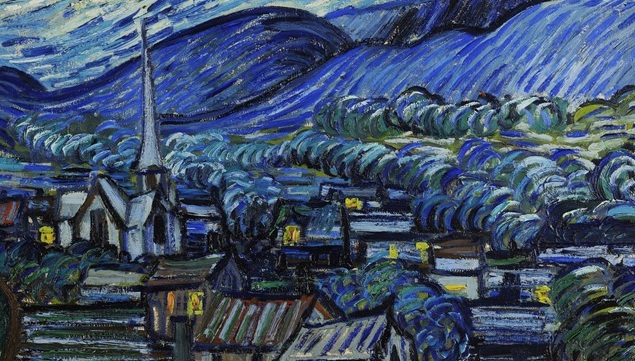
The quiet village beneath the dramatic sky creates an interesting contrast with the powerful movement above.
The village appears calm, orderly, and peaceful. The church steeple rising above the houses may symbolize faith and stability.
Some historians believe Van Gogh added the village from his imagination rather than painting an actual location. This may represent an idealized sense of community or belonging.
The Swirling Sky
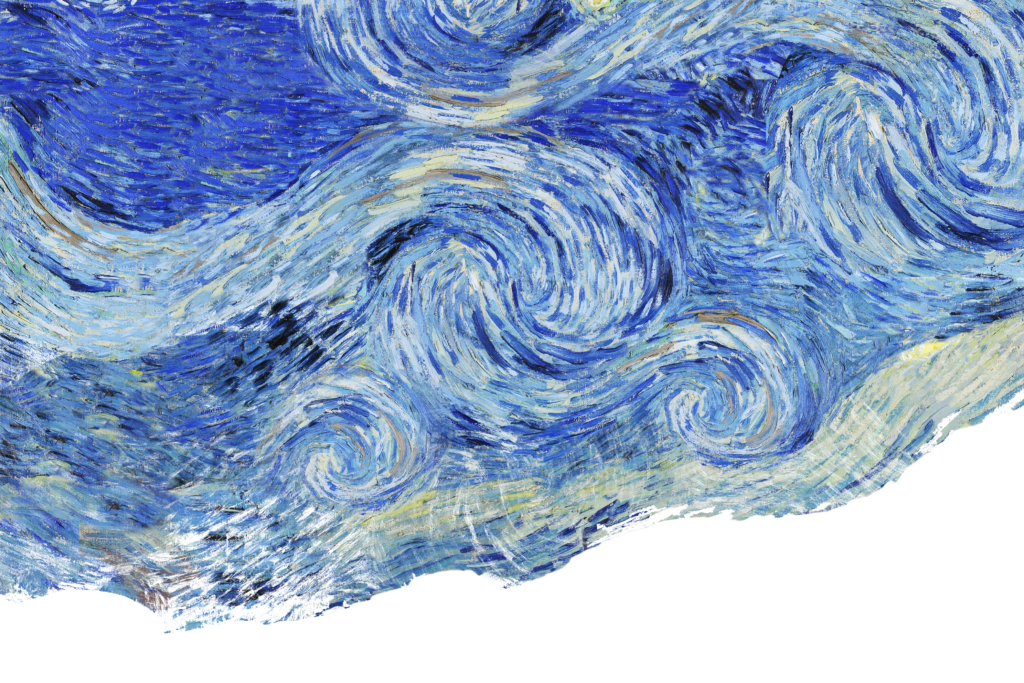
Perhaps the most famous element of The Starry Night is the swirling sky itself. The sweeping patterns create a sense of motion, making the sky appear alive and dynamic.
These swirling forms may represent the movement of the universe or the energy of nature. They could also reflect Van Gogh’s emotional intensity and creative imagination.
The sky in The Starry Night feels almost cosmic, as if it is showing the invisible forces that shape the world.
Why The Symbolism of The Starry Night Matters
The symbolism in The Starry Night adds depth to the painting and invites viewers to explore its meaning.
Each element—the stars, the moon, the cypress tree, and the village—can be interpreted in different ways. This openness allows the painting to remain endlessly fascinating.
More than a simple landscape, The Starry Night becomes a visual expression of emotion, nature, and the mysteries of the universe.
Conclusion
The symbolism in The Starry Night is one of the reasons the painting continues to captivate audiences today. Through carefully chosen elements and dramatic composition, Vincent van Gogh created a work that invites interpretation and reflection.
Whether seen as a spiritual image, an emotional expression, or a celebration of the night sky, The Starry Night remains one of the most powerful paintings in the history of art.
Learn more about The Starry Night.
Frequently Asked Questions
A: The tall, dark cypress tree dominating the left foreground is a traditional symbol of mourning, death, and the link between the earthly world and the afterlife. Van Gogh was drawn to cypress trees throughout his time in Provence and painted them frequently.
A: The iconic swirling sky is interpreted in many ways — as Van Gogh’s emotional turbulence, as the scientific reality of turbulent fluid dynamics (which his brushwork eerily mirrors), or as a spiritual vision of divine energy flowing through the universe.
A: The village in The Starry Night is not a literal depiction of Saint-Rémy-de-Provence, where Van Gogh was staying. Researchers believe he imagined or idealized the scene, possibly incorporating memories of his home village in the Netherlands, suggested by the style of the church steeple.
A: The 11 stars are thought to be a possible reference to the biblical story of Joseph in Genesis, in which Joseph dreams of the sun, moon, and eleven stars bowing to him. Van Gogh had a deep familiarity with scripture from his time as a lay preacher.