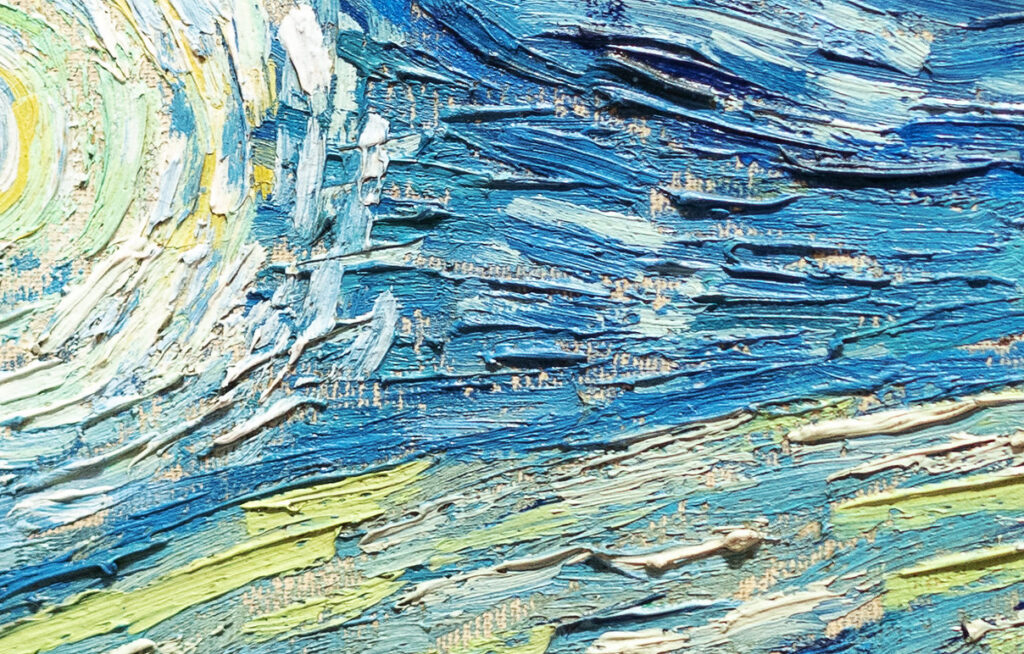
Vincent van Gogh’s painting style is called Post-Impressionism. It is defined by visible, energetic brushstrokes in swirling and directional patterns, the impasto technique of thick raised paint, vibrant and often symbolic use of color, and a focus on emotional expression rather than realistic representation. These choices — combined with his Japanese woodblock influences and complementary color contrasts — make Van Gogh’s work instantly recognizable.
Below is a breakdown of every element that defines his style, with examples from his most famous paintings.
What Is Van Gogh’s Painting Style Called?
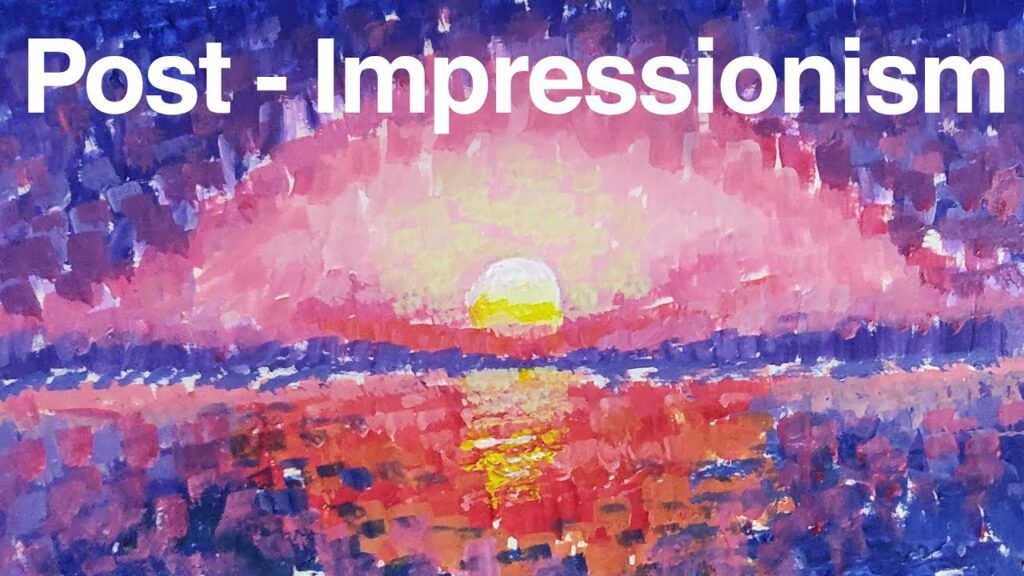
Van Gogh’s painting style is Post-Impressionism. He arrived at it after a short period influenced by the Impressionists in Paris (1886–1888), but he went beyond them. While Impressionists like Monet focused on capturing fleeting light and natural appearances, Van Gogh used color, brushwork, and composition to express emotion and personal meaning. Along with Paul Cézanne, Paul Gauguin, and Georges Seurat, Van Gogh is considered one of the four leading figures of the Post-Impressionist movement.
Key Characteristics of Van Gogh’s Painting Style
Van Gogh’s style is built on a small number of distinctive choices that appear consistently across his mature work from 1888 onward:
- Post-Impressionist movement — emotional expression and symbolic meaning over realistic depiction
- Impasto technique — paint applied in thick, raised layers that catch light and create physical texture on the canvas
- Visible, energetic brushstrokes — often swirling, curved, or directional, never blended smooth
- Bold and symbolic color — exaggerated, non-realistic hues chosen to convey emotion
- Complementary color contrasts — placing opposites like blue/orange and red/green side by side for visual intensity
- Directional lines and movement — composition that pulls the viewer’s eye through the painting
- Japanese woodblock influence — strong outlines, bold flat areas of color, unusual perspective
- Emotional and psychological depth — paintings as vehicles for feeling, not just observation
Impasto: Van Gogh’s Most Recognizable Technique
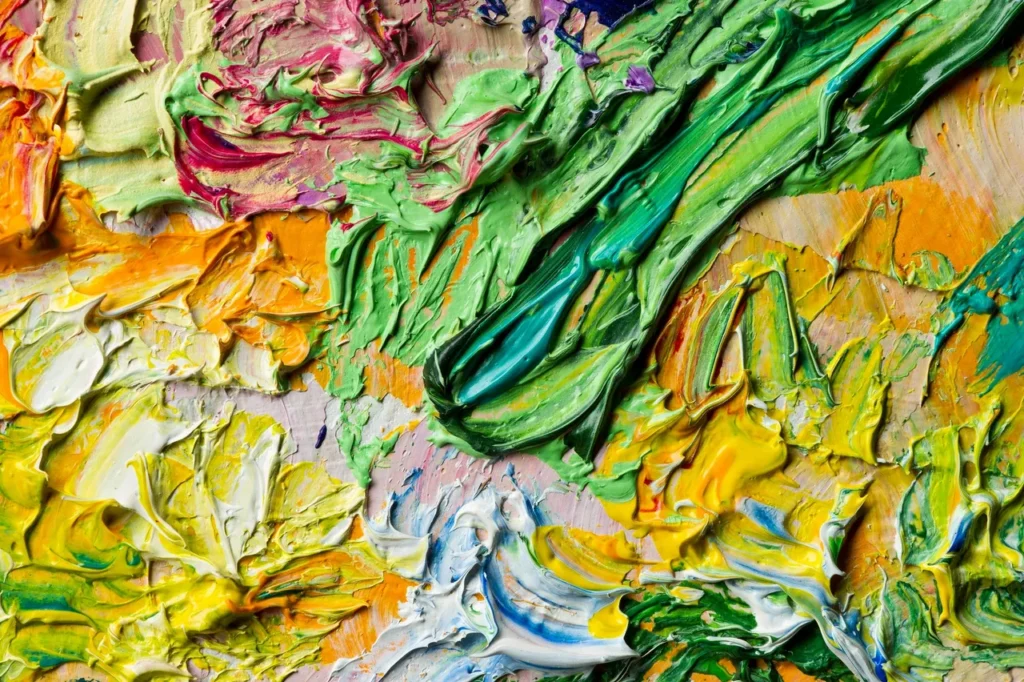
The technique most associated with Van Gogh is impasto — applying paint thickly enough that it physically stands off the surface of the canvas. Where most painters smoothed and blended their brushwork, Van Gogh did the opposite. He often squeezed paint directly from the tube onto the canvas, then worked it with a stiff brush or palette knife.
The effect is that individual brushstrokes are not just visible — they are tactile. The paint catches and reflects light differently depending on the angle, giving his paintings a quality almost like low relief sculpture. In Wheatfield with Crows (1890) and The Starry Night (1889), impasto is what gives the surface its energy. The painting is not just an image; it is a record of physical motion.
Brushwork: Swirls, Hatching, and Directional Marks
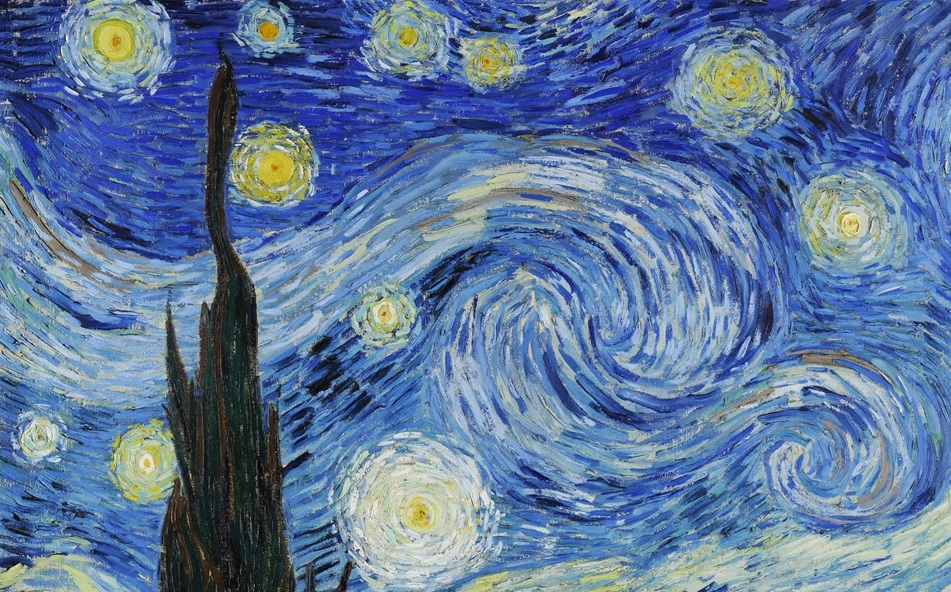
Van Gogh’s brushwork follows recognizable patterns. The most famous is the swirling stroke seen in the sky of The Starry Night — curved, repeating, almost spiraling marks that create the sensation of motion. But he used several other characteristic strokes depending on the subject:
- Parallel hatching for fields and grass, with strokes running in the same direction
- Curved, rhythmic strokes for clouds, water, and trees
- Short, dense, dab-like strokes for foliage and flowers
- Long, fluid lines for cypress trees and reeds
These patterns are not decoration — they shape how the eye moves through the painting. The sky in The Starry Night feels alive precisely because the brushstrokes themselves are doing the moving.
Color: Bold, Symbolic, and Emotionally Charged
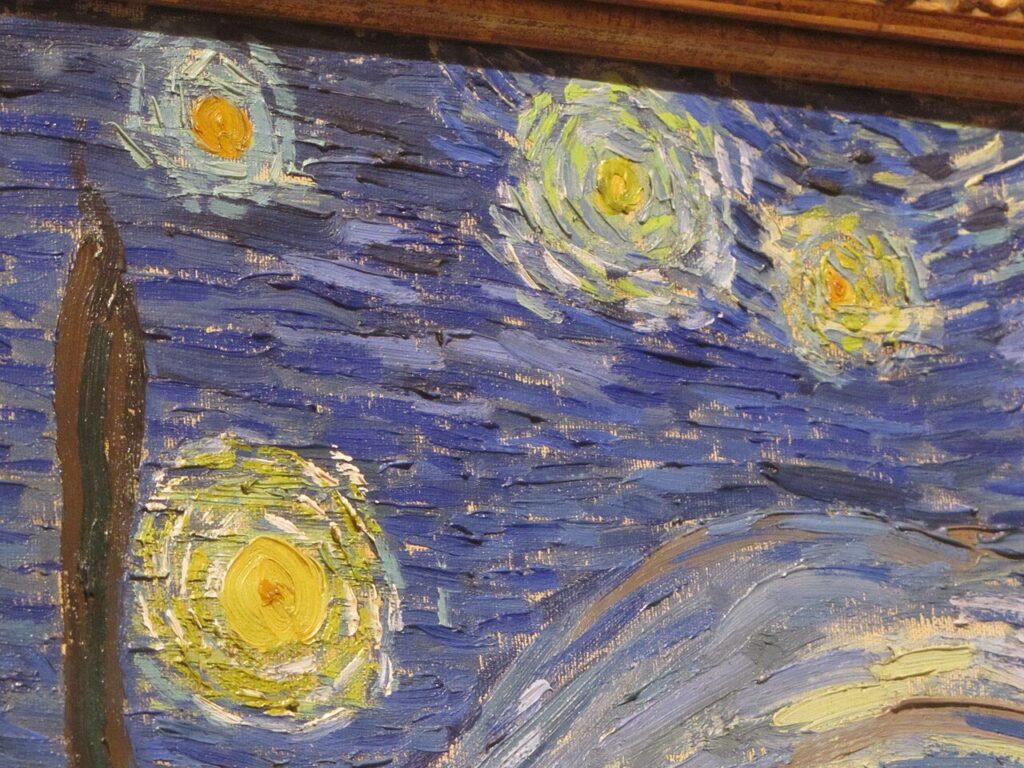
Van Gogh treated color the way poets treat words: as something with meaning beyond its literal reference. He rarely painted things in the colors they actually were. Instead, he chose colors that expressed how the subject felt.
Some patterns recur throughout his mature work:
- Bright yellows and oranges for warmth, vitality, sunlight, and joy (Sunflowers, Café Terrace at Night)
- Deep blues and violets for night, depth, melancholy, and the infinite (The Starry Night, Bedroom in Arles)
- Greens and reds in opposition to express tension or anxiety (The Night Café)
- Yellow on blue as a signature contrast for hope inside darkness
He drew heavily on complementary color theory, the idea that opposing colors on the color wheel intensify each other when placed side by side. This is why his paintings feel so visually loud — the colors are literally fighting for attention.
Influences That Shaped His Style
Van Gogh’s style did not emerge in isolation. Several specific influences shaped it:
- The Hague School and Jean-François Millet — Van Gogh’s early Dutch period (1880–1885) was dominated by dark, earthy peasant scenes inspired by Millet. The Potato Eaters (1885) is the clearest example.
- Impressionism in Paris — Moving to Paris in 1886 exposed him to Monet, Pissarro, and Seurat. His palette brightened dramatically within months.
- Japanese woodblock prints (ukiyo-e) — He collected them, copied them, and absorbed their flat areas of color, bold outlines, and asymmetric compositions.
- Adolphe Monticelli — A French painter whose thick impasto and bold color directly inspired Van Gogh’s mature technique.
- Paul Gauguin — Their intense (and ultimately disastrous) period together in Arles in 1888 pushed Van Gogh further toward symbolic, non-realistic painting.
How Van Gogh’s Style Evolved
Van Gogh’s painting career lasted only about ten years, but his style changed dramatically across that decade. It can be broken into four clear periods:
| Period | Years | Location | Style |
| Dutch period | 1880–1885 | Netherlands | Dark palette, peasant subjects, heavy realism |
| Paris period | 1886–1888 | Paris | Brighter colors, looser brushwork, Impressionist influence |
| Arles period | 1888–1889 | Arles, France | Mature style: bold color, impasto, expressive brushwork |
| Saint-Rémy & Auvers | 1889–1890 | Saint-Rémy, Auvers | Swirling forms, emotional intensity, his most iconic works |
The Arles period is where his recognizable style fully crystallized. Most of the paintings the world now associates with Van Gogh — Sunflowers, Café Terrace at Night, The Bedroom, Starry Night Over the Rhône — were made in this 15-month window. The Starry Night itself was painted in the following period, at the Saint-Paul-de-Mausole asylum in Saint-Rémy.
Emotional Expression Over Realism
The single most important idea behind Van Gogh’s painting style is that art should express feeling, not just depict appearance. He wrote to his brother Theo: “I want to paint humanity, humanity and again humanity.” And in another letter: “Instead of trying to reproduce exactly what I have before my eyes, I use color more arbitrarily to express myself more forcefully.”
This conviction is what makes his paintings feel different from those of artists with similar technical skills. The dramatic motion in the sky of The Starry Night, the searing yellow of Sunflowers, the unsettling green-red contrasts of The Night Café — these are not records of what those subjects looked like. They are records of what they felt like to him.
Van Gogh’s Influence on Modern Art
Although Van Gogh sold only one painting in his lifetime and received almost no recognition before his death in 1890, his style became one of the most influential forces in twentieth-century art. The movements he directly shaped include:
- Expressionism (Germany, early 1900s) — artists like Edvard Munch, Egon Schiele, and the Die Brücke group took Van Gogh’s emotional intensity as a starting point
- Fauvism (France, 1905–1910) — Henri Matisse and André Derain inherited his bold, non-realistic color
- Abstract Expressionism (United States, 1940s–50s) — Willem de Kooning and Jackson Pollock acknowledged Van Gogh’s expressive brushwork as a direct ancestor
His approach — that painting should communicate emotion through color, brushwork, and composition rather than imitate reality — is now considered one of the foundational ideas of modern art.
Van Gogh’s Painting Style at a Glance
| Element | What Defines It |
| Movement | Post-Impressionism |
| Brushwork | Visible, energetic, swirling and directional |
| Paint application | Impasto — thick, raised layers |
| Color | Bold, symbolic, complementary contrasts |
| Composition | Directional lines that create movement |
| Subjects | Landscapes, portraits, flowers, night scenes, peasants |
| Approach | Emotional expression over realistic depiction |
| Career length | About 10 years (1880–1890) |
| Total works | ~900 oil paintings, ~1,100 drawings |
Conclusion
Van Gogh’s painting style is Post-Impressionism at its boldest — a style built on visible brushwork, thick impasto, exaggerated color, and the conviction that paintings should make you feel something. In just ten years he produced nine hundred paintings, almost none of them sold during his lifetime, and almost all of them now considered milestones in the history of modern art. The reason his work is instantly recognizable is that he wasn’t painting the world he saw. He was painting the world he felt.
For more on the most famous example of his mature style, read our full guide to The Starry Night, or explore the symbolism and meaning behind it.
Frequently Asked Questions
What is Van Gogh’s painting style called?
Van Gogh’s painting style is called Post-Impressionism. He developed it after being influenced by the Impressionists in Paris in 1886–1888, but he went beyond Impressionism by using color and brushwork to express emotion rather than capture light. Along with Cézanne, Gauguin, and Seurat, he is one of the four leading Post-Impressionists.
What are the main characteristics of Van Gogh’s painting style?
The main characteristics are: thick impasto paint application, visible and swirling brushstrokes, bold and symbolic use of color, complementary color contrasts, directional lines that create movement, and an emphasis on emotional expression rather than realistic depiction.
What is the impasto technique and how did Van Gogh use it?
Impasto is a painting technique where paint is applied so thickly that it stands off the surface of the canvas in raised layers. Van Gogh used it extensively, often squeezing paint directly from the tube and working it with stiff brushes or palette knives. The result is that his brushstrokes are not just visible but physically tactile, catching light differently across the painting surface.
Why are Van Gogh’s brushstrokes so visible?
Van Gogh deliberately left his brushstrokes visible because they were a key part of his expression, not just a means to an end. His swirling, curved, and directional marks create a sense of motion and emotional intensity. In paintings like The Starry Night, the brushwork itself is what makes the sky feel alive.
How did Van Gogh use color differently from other artists?
Van Gogh used color expressively rather than realistically. He exaggerated and intensified hues to convey emotion — bright yellows and oranges for warmth and joy, deep blues for depth and melancholy. He also relied heavily on complementary color contrasts, placing opposites like blue and orange or red and green side by side to create visual intensity, as in Café Terrace at Night and The Night Café.
What artists influenced Van Gogh’s style?
Van Gogh was influenced by Jean-François Millet (for peasant subjects and dignified labor), the Impressionists (for brighter color and looser brushwork), Adolphe Monticelli (for impasto and bold color), Paul Gauguin (for symbolic, non-realistic painting), and Japanese woodblock printmakers, especially Hiroshige and Hokusai (for flat color areas, bold outlines, and unusual compositions).
How long did Van Gogh paint for, and how many works did he produce?
Van Gogh’s painting career lasted only about ten years, from roughly 1880 to his death in 1890. In that short period he produced approximately 900 oil paintings and over 1,100 drawings and sketches — an extraordinary output that makes his influence on modern art even more remarkable.
What movements did Van Gogh’s style influence?
Van Gogh’s style directly influenced Expressionism in early 20th-century Germany, Fauvism in France (1905–1910), and Abstract Expressionism in mid-century America. His core idea — that paintings should express emotion through color and brushwork rather than imitate reality — became one of the foundational principles of modern art.