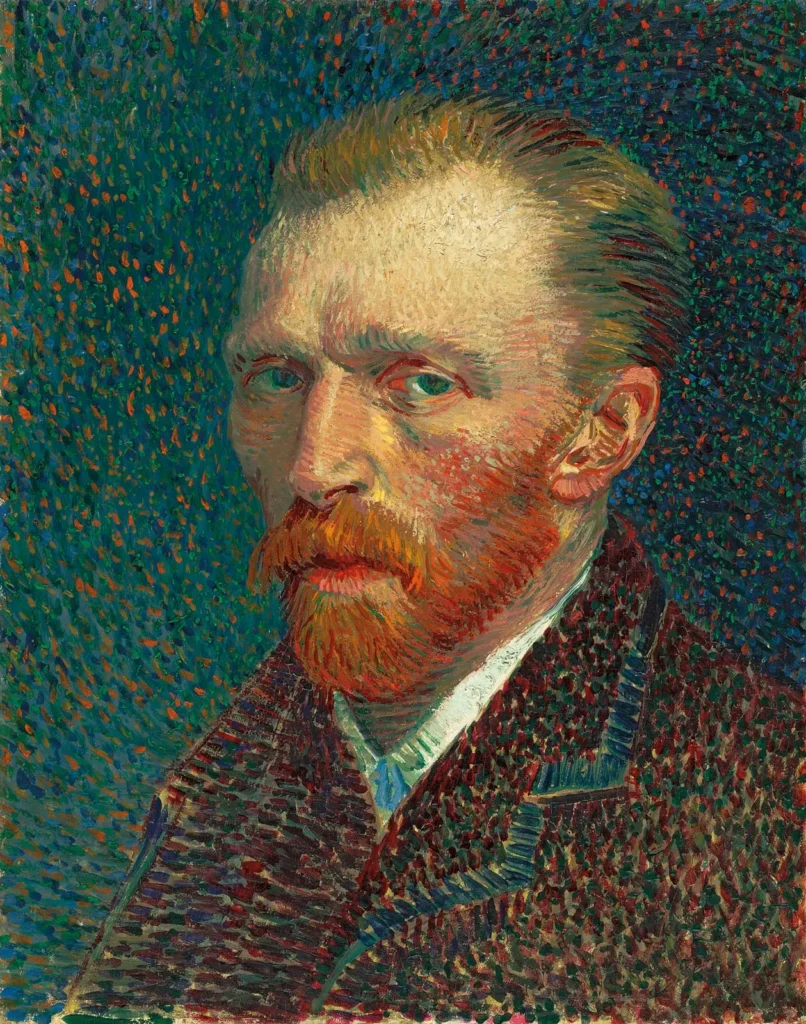
Vincent van Gogh is one of the most famous and influential artists in the history of Western art. Known for his bold colors, expressive brushstrokes, and emotionally powerful paintings, Van Gogh created more than 2,000 artworks during his lifetime, including around 900 paintings.
Despite his incredible talent, Van Gogh struggled with poverty, mental illness, and loneliness throughout much of his life. He sold very few paintings while he was alive, yet today his works are among the most celebrated and valuable in the world.
This biography explores Van Gogh’s early life, artistic development, struggles, and lasting legacy.
Early Life and Family
Vincent Willem van Gogh was born on March 30, 1853, in the small town of Zundert in the Netherlands.
He was the eldest surviving child of Theodorus van Gogh, a Protestant minister, and Anna Cornelia Carbentus. Vincent grew up in a religious household and was deeply influenced by his father’s work and moral values.
As a child, Van Gogh was quiet and thoughtful. He showed an early interest in drawing, but no one could have predicted that he would later become one of the most famous painters in history.
Early Career and Search for Purpose
Before becoming an artist, Van Gogh tried several different careers.
In his late teens, he worked as an art dealer for a company called Goupil & Cie, which had offices in cities such as The Hague, London, and Paris. This job exposed him to the art world, but he eventually lost interest in the commercial side of the business.
Later, Van Gogh attempted to follow in his father’s footsteps and become a minister. He worked as a missionary in a poor mining region in Belgium, where he lived among workers and tried to support them spiritually.
However, his intense dedication and unconventional behavior led to difficulties with church authorities, and he eventually left this path as well.
Beginning His Career as an Artist
Van Gogh decided to pursue art seriously around 1880, when he was about 27 years old.
During the early years of his artistic career, he focused mainly on drawing and painting scenes of rural life. Many of his early works were dark in tone and depicted peasants, workers, and everyday people.
One of his most famous early paintings is The Potato Eaters (1885), which portrays a group of peasants sharing a humble meal. The painting reflects Van Gogh’s interest in the lives of ordinary people.
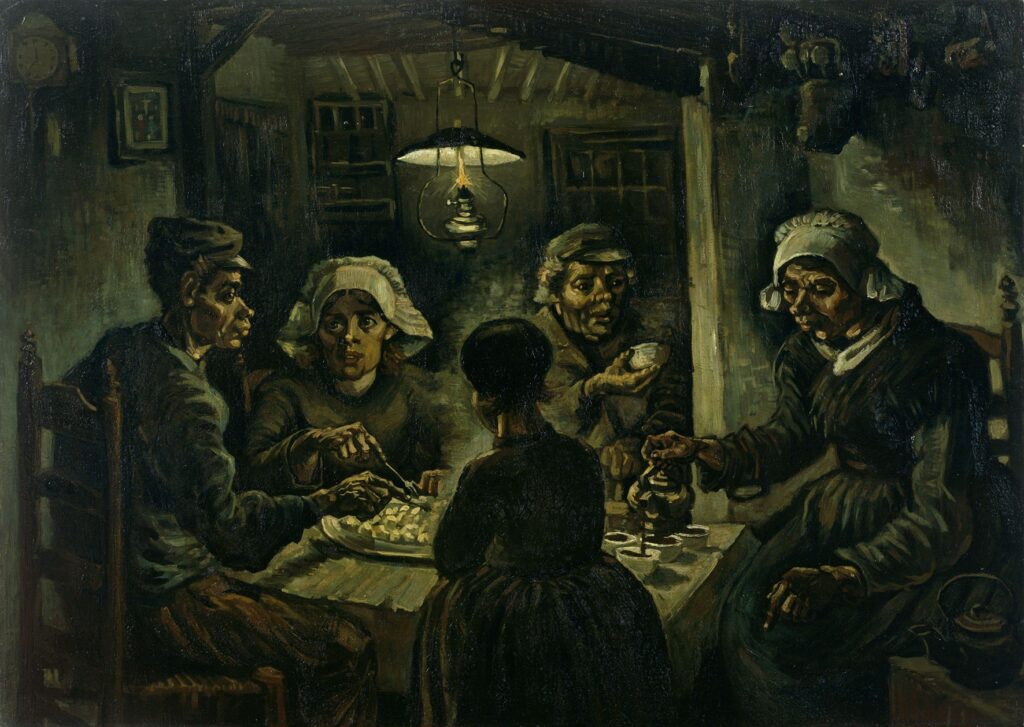
The Potato Eaters
Move to Paris and Artistic Transformation
In 1886, Van Gogh moved to Paris, where his brother Theo van Gogh lived and worked as an art dealer.
Paris was a major center of artistic innovation at the time. There, Van Gogh encountered new artistic movements such as Impressionism and Post-Impressionism.
Artists like Claude Monet, Edgar Degas, and Paul Gauguin influenced him greatly.
Exposure to these new styles transformed Van Gogh’s art. His palette became brighter, and he began experimenting with bold colors and energetic brushstrokes.
This period marked a turning point in his artistic development.
Life in Arles and the Creation of Masterpieces
In 1888, Van Gogh moved to Arles in southern France, hoping to create a community of artists.
During this period, he produced many of his most famous works, including:
- Sunflowers
- Café Terrace at Night
- The Bedroom
- The Night Café
Van Gogh invited artist Paul Gauguin to join him in Arles, but their relationship quickly became strained. After a series of arguments, Van Gogh experienced a mental health crisis.
During this time, he famously cut off part of his ear, an incident that remains one of the most discussed moments in art history.
Learn more about Van Gogh’s life in Arles.
The Starry Night and the Asylum Years
After his breakdown, Van Gogh voluntarily admitted himself to the Saint-Paul-de-Mausole asylum in Saint-Rémy-de-Provence in 1889.
Despite his struggles, he continued to paint intensely during this period. Some of his most famous works were created while he was in the asylum.
One of these paintings was The Starry Night, which depicts a swirling night sky above a quiet village. Today, it is considered one of the most iconic paintings ever created.
Van Gogh’s paintings from this period show extraordinary emotional intensity and creativity.
Final Months and Death
In 1890, Van Gogh moved to Auvers-sur-Oise, a village near Paris, where he worked under the care of a doctor named Paul Gachet.
During the final months of his life, Van Gogh painted rapidly, producing around 70 paintings in just a few months.
However, his mental health struggles continued. On July 27, 1890, Van Gogh suffered a gunshot wound, widely believed to have been self-inflicted.
He died two days later, on July 29, 1890, at the age of 37.
His brother Theo, who had supported him throughout his life, was deeply devastated by his death.
Van Gogh’s Legacy
Although Van Gogh received little recognition during his lifetime, his work gained enormous appreciation in the years after his death.
Today, he is considered one of the most important artists in modern art history. His paintings are displayed in major museums around the world, and many have sold for hundreds of millions of dollars.
Van Gogh’s unique style, emotional intensity, and bold use of color influenced generations of artists and helped shape modern art.
Paintings such as The Starry Night, Sunflowers, and Irises continue to inspire millions of people.
Conclusion
Vincent van Gogh’s life was marked by struggle, passion, and extraordinary creativity. Despite facing poverty, mental illness, and rejection during his lifetime, he produced some of the most powerful and recognizable artworks ever created.
Today, Van Gogh is celebrated as one of the greatest artists in history, and his work continues to captivate audiences across the world.
His story reminds us that artistic genius is often recognized only long after the artist is gone.
Frequently Asked Question
A: Van Gogh produced approximately 900 oil paintings and over 1,100 works on paper during his relatively short career. Almost all of them were created in the last decade of his life, between 1880 and 1890.
A: Van Gogh sold only one painting during his lifetime — The Red Vineyard, sold in 1890 for 400 francs (approx $2000 in today’s value). Despite this, he continued painting prolifically, sustained largely by financial support from his brother Theo.
A: The exact nature of Van Gogh’s condition has been debated for over a century. Proposed diagnoses include bipolar disorder, epilepsy, and acute intermittent porphyria. He suffered from episodes of psychosis throughout the last two years of his life.
A: Van Gogh died on July 29, 1890, at age 37, two days after sustaining a gunshot wound to the abdomen in Auvers-sur-Oise, France. The wound has traditionally been considered self-inflicted, though some researchers have proposed alternative theories.