Among the many masterpieces created by Vincent van Gogh, the Sunflowers series is one of the most famous and recognizable. These vibrant paintings of bright yellow sunflowers in a vase have become iconic symbols of Van Gogh’s art and his bold approach to color.
Painted during the late 1880s, the Sunflowers paintings reflect Van Gogh’s fascination with color, light, and nature. Today, they are considered some of the most celebrated still-life paintings in the history of art.
In this article, we explore the story behind Van Gogh’s Sunflowers, why he painted them, and what makes these paintings so special.
When Did Van Gogh Paint Sunflowers?
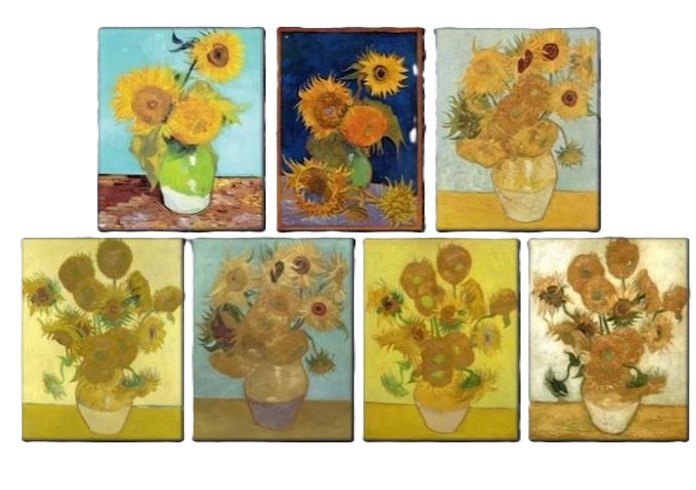
Vincent van Gogh created two different groups of sunflower paintings.
The first group was painted in Paris in 1887. These works show sunflowers lying on a surface and were part of Van Gogh’s experiments with color and composition.
The second and most famous group was painted in Arles in 1888 and 1889, in southern France. These paintings depict sunflowers arranged in a vase.
The Arles Sunflowers are the most well-known versions and are the paintings most people refer to when discussing Van Gogh’s Sunflowers.
Why Van Gogh Painted Sunflowers
Van Gogh painted the Sunflowers series partly as a way to decorate the Yellow House in Arles, where he hoped to create a community of artists.
He wanted the paintings to welcome fellow artist Paul Gauguin, who was planning to come and stay with him.
Van Gogh believed the bright yellow flowers represented friendship, happiness, and warmth. He was especially fascinated with the color yellow, which he used frequently in his paintings during this period.
The Sunflowers paintings were meant to create a warm and inviting atmosphere inside the house.
The Unique Use of Color
One of the most striking aspects of the Sunflowers paintings is their bold use of yellow.
Van Gogh used many different shades of yellow—golden, ochre, lemon, and amber—to create depth and variation within the painting.
Instead of relying on a wide range of colors, Van Gogh focused on a monochromatic palette, exploring how different tones of yellow could interact with one another.
This bold approach to color was unusual at the time and became one of the defining features of his style.
The Expressive Brushwork
Like many of Van Gogh’s paintings, the Sunflowers series features thick paint and visible brushstrokes.
Using a technique known as impasto, Van Gogh applied paint in thick layers that create texture on the canvas. The petals, leaves, and seeds of the sunflowers appear almost sculptural because of the heavy paint.
This textured surface gives the painting energy and movement, making the flowers appear alive.
Learn more about Van Gogh’s painting style.
How Many Sunflowers Paintings Exist?
Van Gogh created several versions of the Sunflowers paintings.
Today, the most famous versions are displayed in major museums around the world, including:
- The National Gallery, London
- Van Gogh Museum, Amsterdam
- Neue Pinakothek, Munich
- Sompo Museum of Art, Tokyo
Although the paintings look similar, each version has slight differences in composition, color, and number of flowers.
Why Sunflowers Became So Famous
The Sunflowers paintings have become some of the most recognizable images in art history.
There are several reasons for their lasting popularity:
- Their bright, vibrant colors
- Their bold and expressive brushwork
- Their simple but powerful composition
- Their connection to Van Gogh’s life in Arles
Over time, Sunflowers became a symbol of Van Gogh’s artistic vision and emotional intensity.
The Symbolism of Sunflowers
Sunflowers have often been associated with loyalty, warmth, and life.
In Van Gogh’s paintings, the flowers appear in different stages—from blooming to wilting. Some art historians interpret this as a reflection of the cycle of life and the passage of time.
The combination of beauty and decay in the flowers may also reflect Van Gogh’s own awareness of life’s fragility.
Sunflowers and Van Gogh’s Legacy
Today, Van Gogh’s Sunflowers are among the most celebrated paintings in the world.
They are frequently reproduced in books, posters, and exhibitions, and they continue to inspire artists and viewers alike.
The Sunflowers series demonstrates Van Gogh’s ability to transform an ordinary subject into a powerful and emotionally expressive work of art.
Conclusion
The Sunflowers paintings represent one of the most important moments in Vincent van Gogh’s artistic career. Through bold color, expressive brushwork, and simple composition, Van Gogh turned a vase of flowers into a masterpiece of modern art.
More than a century later, the Sunflowers continue to symbolize Van Gogh’s creativity, passion, and unique artistic vision.
A: Van Gogh created several versions of the Sunflowers paintings across two periods — the first group in Paris in 1887, showing sunflowers lying flat on a surface, and the more famous second group in Arles in 1888–1889, depicting sunflowers in a vase. Today the most celebrated versions are displayed at the National Gallery in London, the Van Gogh Museum in Amsterdam, the Neue Pinakothek in Munich, and the Sompo Museum of Art in Tokyo.
A: Van Gogh painted the Sunflowers series primarily to decorate the Yellow House in Arles, where he hoped to create an artistic community. He wanted to welcome fellow painter Paul Gauguin and believed the bright yellow flowers represented friendship, warmth, and happiness. The paintings were intended to create an inviting atmosphere inside the house.
A: Sunflowers in Van Gogh’s paintings are associated with loyalty, warmth, and the cycle of life. He depicted the flowers in different stages — from blooming to wilting — which some art historians interpret as a reflection on life’s fragility and the passage of time. Van Gogh was also deeply drawn to the color yellow, which he associated with energy and light.
A: Van Gogh used the impasto technique, applying thick layers of oil paint that stand out from the canvas surface. This gives the petals, leaves, and seeds of the sunflowers a sculptural, almost three-dimensional quality. He also focused on a largely monochromatic yellow palette, exploring how different shades — golden, ochre, lemon, and amber — could create depth and variation.
A: The most well-known version of the Sunflowers is housed at the National Gallery in London. Other versions are held at the Van Gogh Museum in Amsterdam, the Neue Pinakothek in Munich, and the Sompo Museum of Art in Tokyo, each with slight differences in composition and number of flowers.