Vincent van Gogh’s The Starry Night, painted in 1889, is one of the most recognizable paintings in the world. At first glance, viewers are drawn to the glowing stars and dramatic swirling sky. However, when you look closer, the painting contains many subtle and fascinating details.
From hidden astronomical clues to unusual artistic choices, these small elements reveal how carefully Van Gogh constructed this masterpiece. Understanding these hidden details helps us appreciate the painting not just as a beautiful image, but as a deeply thoughtful work of art.
The Swirling Patterns in the Sky
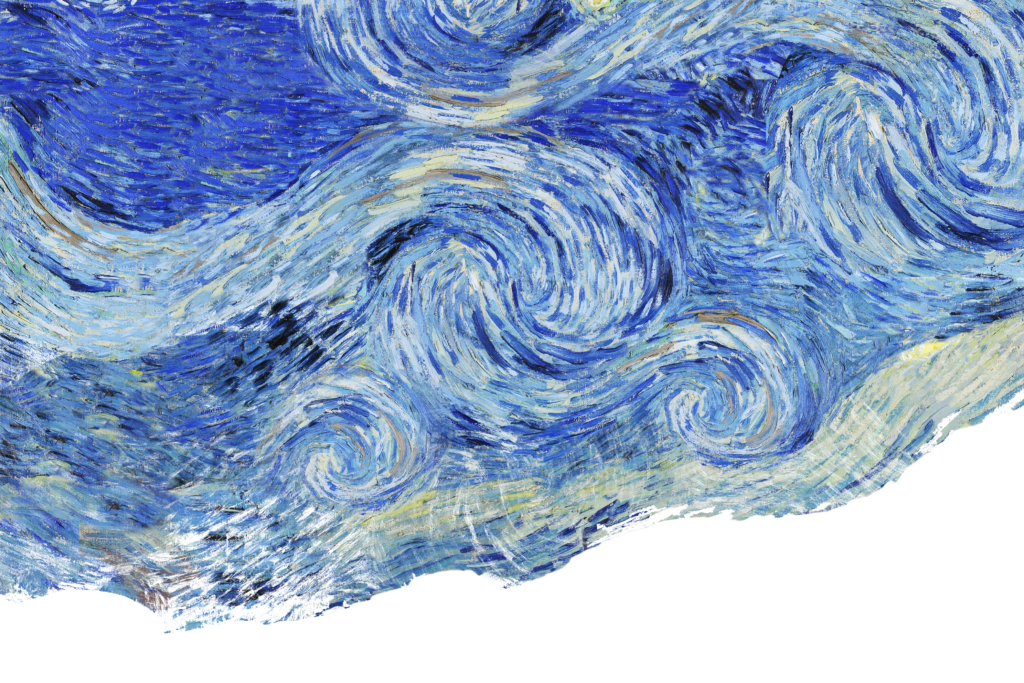
One of the most striking details in The Starry Night is the movement in the sky. The sweeping curves and spirals create a sense that the sky itself is alive and constantly shifting.
Art historians have long studied these patterns. Some researchers believe the swirling shapes resemble turbulence patterns found in fluid dynamics, similar to how clouds or water currents move in nature. Whether intentional or not, this gives the painting an extraordinary sense of energy.
Van Gogh used thick, curved brushstrokes to build these swirling patterns. This technique makes the sky appear almost three-dimensional.
The Cypress Tree in the Foreground
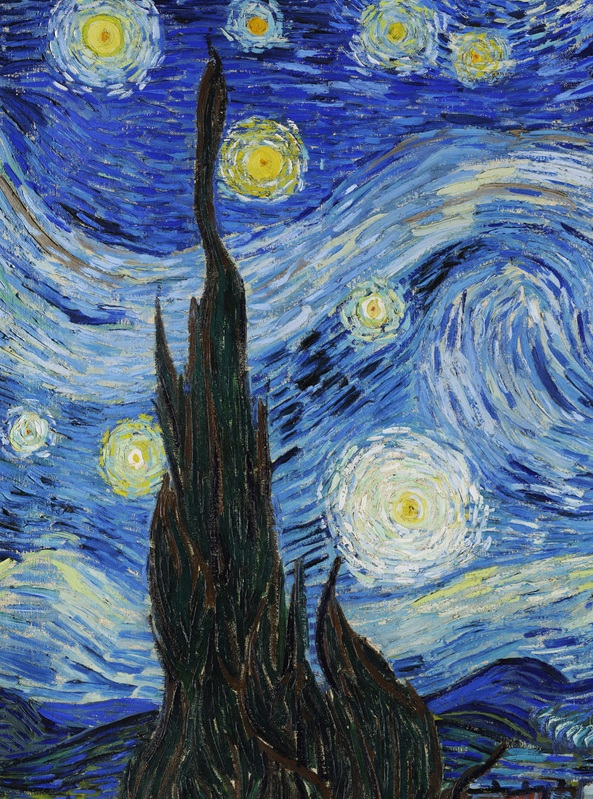
The large cypress tree in the foreground is easy to notice, but its deeper meaning is often overlooked.
Cypress trees are common in the Mediterranean region and are traditionally associated with cemeteries and remembrance. Because of this symbolism, some art historians believe the tree represents a connection between life and death.
The shape of the tree is also interesting. Its flame-like form seems to stretch upward, almost merging with the swirling sky. This visually links the earth and the heavens.
The Quiet Village That Was Never There
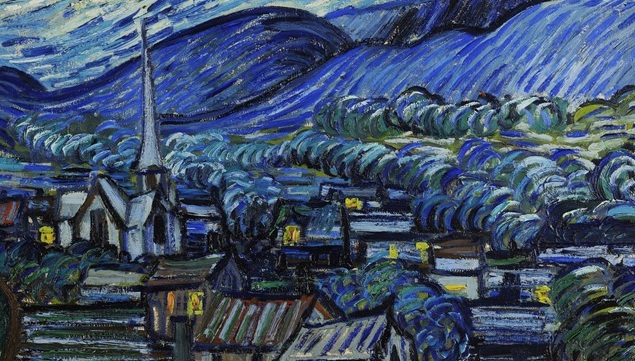
One surprising detail about The Starry Night is the village beneath the sky.
Although Van Gogh painted the scene while staying in an asylum in Saint-Rémy-de-Provence, the village in the painting does not actually exist in the landscape outside his window.
Instead, many historians believe Van Gogh imagined or adapted the village from memories of northern European towns. The tall church steeple resembles architecture more common in the Netherlands than in southern France.
This suggests the painting is not a direct copy of reality, but rather a blend of observation and imagination.
The Unusual Number of Stars
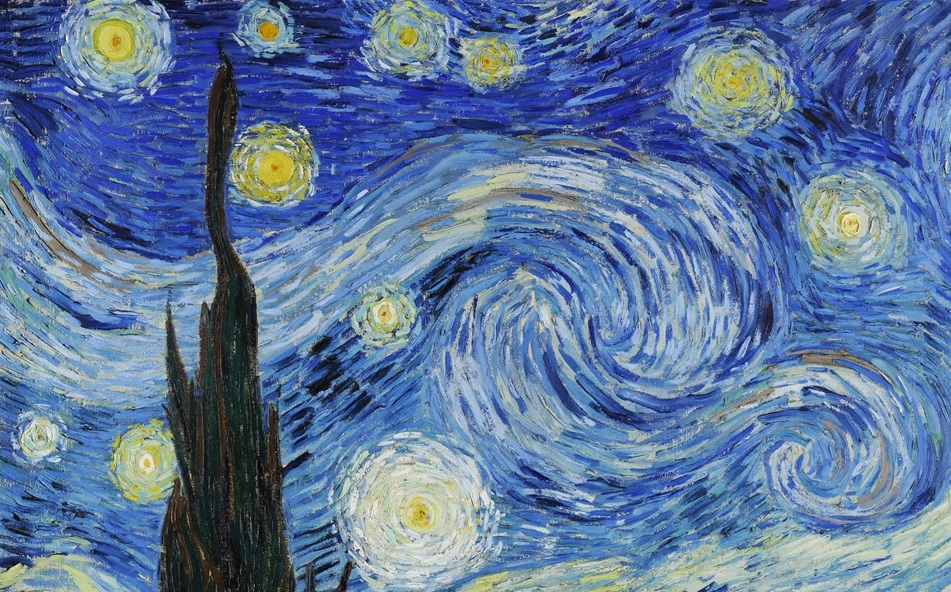
If you look closely, you can count eleven bright stars in the sky, along with the glowing moon.
Some scholars believe this number might have symbolic meaning. One theory connects the stars to a biblical story in the Book of Genesis, where Joseph dreams of eleven stars bowing before him.
However, there is no definitive proof that Van Gogh intended this symbolism. The stars may simply represent the vastness and beauty of the night sky.
The Bright Halo Around Each Star
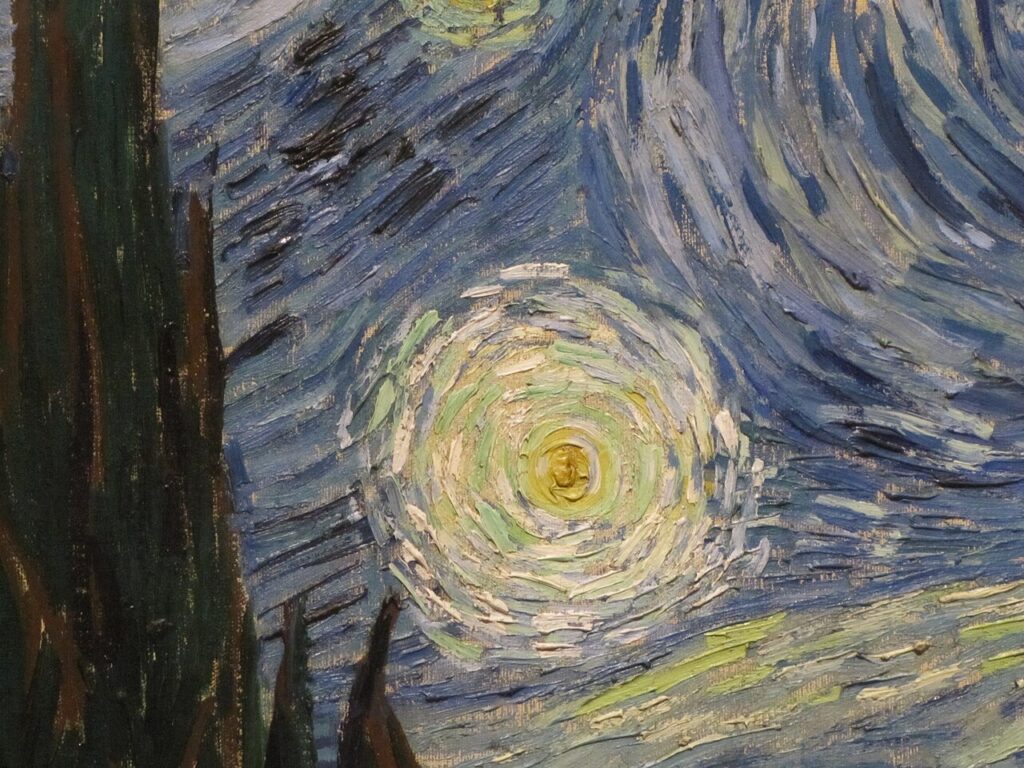
Another subtle detail is the radiating halos around each star.
Van Gogh painted these stars with glowing rings of light, making them appear unusually large and luminous. This technique adds drama to the scene and emphasizes the importance of the sky.
Some historians believe these halos may have been inspired by Van Gogh’s observations of the night sky, while others think they reflect the artist’s emotional interpretation of the stars.
The Balance Between Calm and Movement
One of the most interesting hidden details in The Starry Night is the contrast between two parts of the painting.
- The sky is filled with dramatic movement and swirling energy.
- The village below appears calm, quiet, and still.
This contrast creates a powerful visual balance. The peaceful houses and church ground the painting, while the dynamic sky adds emotional intensity.
Van Gogh may have intentionally used this contrast to express the tension between inner emotion and external calm.
The Unique Brushstroke Technique
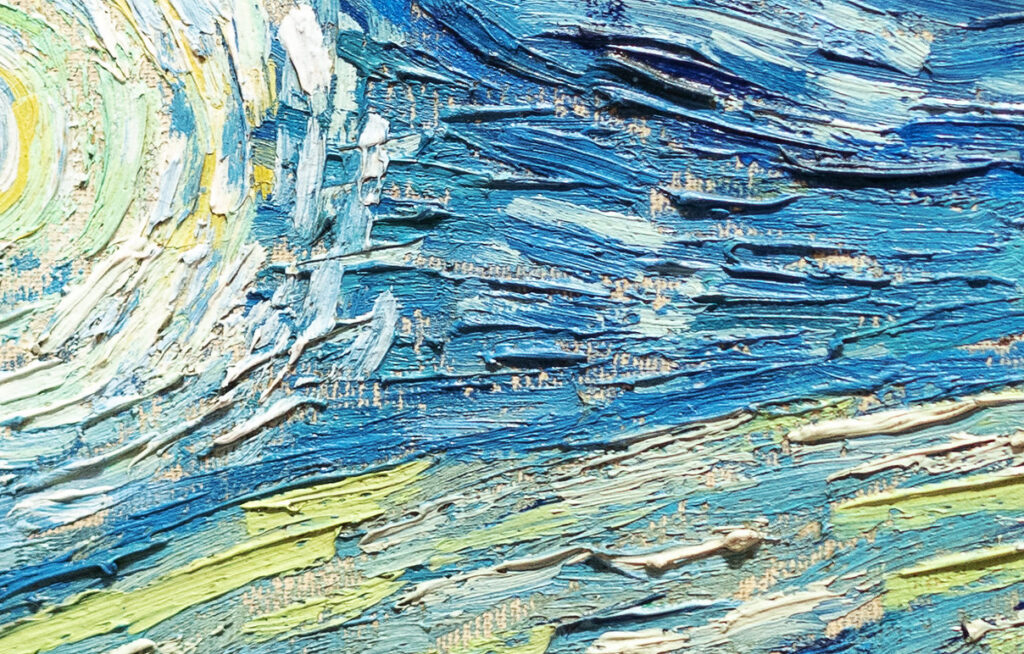
Looking closely at the painting reveals Van Gogh’s distinctive painting technique.
He used thick layers of paint and visible brushstrokes, a method known as impasto. Instead of blending colors smoothly, Van Gogh allowed the brushstrokes to remain visible.
This technique gives the painting texture and movement. The brushstrokes themselves become part of the artwork’s expression.
Learn more about Van Gog’s Unique Painting Style
Why These Hidden Details Matter
The hidden details in The Starry Night show that Van Gogh was not simply painting a night landscape. He was creating a carefully composed work filled with symbolism, imagination, and emotion.
Every element—from the swirling sky to the quiet village—plays a role in shaping the painting’s meaning and atmosphere.
These details help explain why the painting continues to captivate viewers more than a century after it was created.
Conclusion
At first glance, The Starry Night may appear to be a simple depiction of a night sky. But when examined closely, the painting reveals many hidden details that deepen its meaning.
Through imaginative elements, symbolic imagery, and expressive brushwork, Vincent van Gogh created a masterpiece that invites viewers to keep discovering new layers within it.
Even today, The Starry Night continues to inspire curiosity, discussion, and admiration around the world.
Learn more about the The Starry Night
Frequently Asked Questions
A: No – the village in The Starry Night does not exist in the actual landscape outside Van Gogh’s window at the Saint-Rémy asylum. Historians believe he imagined or adapted it from memories of northern European towns, as the church steeple resembles Dutch architecture rather than anything found in southern France.
A: There are exactly 11 bright stars visible in The Starry Night, along with the glowing crescent moon. Some scholars link the number to the biblical story of Joseph in Genesis, where Joseph dreams of eleven stars bowing before him, though this has never been conclusively proven.
A: Impasto is a painting method where thick layers of paint are applied and left visible rather than blended smooth. Van Gogh used it throughout The Starry Night, building up textured ridges of paint with his brush. This gives the painting its distinctive three-dimensional, almost sculptural surface that adds to the sense of movement.
A: Van Gogh painted radiating rings of light around each star, making them appear unusually large and luminous. This may reflect his personal observations of the night sky, or his emotional interpretation of starlight — amplifying their visual drama and making the sky feel alive with energy.
A: Researchers have noted that the swirling patterns in The Starry Night closely resemble the mathematical patterns of turbulent fluid dynamics — the same physics that governs how clouds, rivers, and air currents move. Whether Van Gogh consciously intended this or captured it intuitively remains one of the most fascinating aspects of the painting.