In February 1888, Vincent van Gogh moved to the small town of Arles in southern France. This period would become one of the most important and productive phases of his artistic life.
During his time in Arles, Van Gogh created some of his most famous paintings, experimented with vibrant colors, and dreamed of building an artistic community in the south of France. However, this period was also marked by emotional struggles and dramatic events that would shape the rest of his life.
Van Gogh’s time in Arles lasted only about 15 months, yet it produced some of the most iconic works in the history of art.
Why Van Gogh Moved to Arles
After living in Paris for two years, Van Gogh began to feel overwhelmed by the busy city environment. He wanted to find a place with more sunlight, vibrant landscapes, and a slower pace of life.
Southern France offered exactly what he was looking for.
Arles had bright sunshine, colorful buildings, and beautiful countryside. Van Gogh believed that the strong southern light would inspire a new artistic direction in his work.
When he arrived in Arles, he wrote enthusiastically to his brother Theo about the vivid colors of the landscape.
The Yellow House
Soon after arriving in Arles, Van Gogh rented a small house with yellow walls that later became known as The Yellow House.
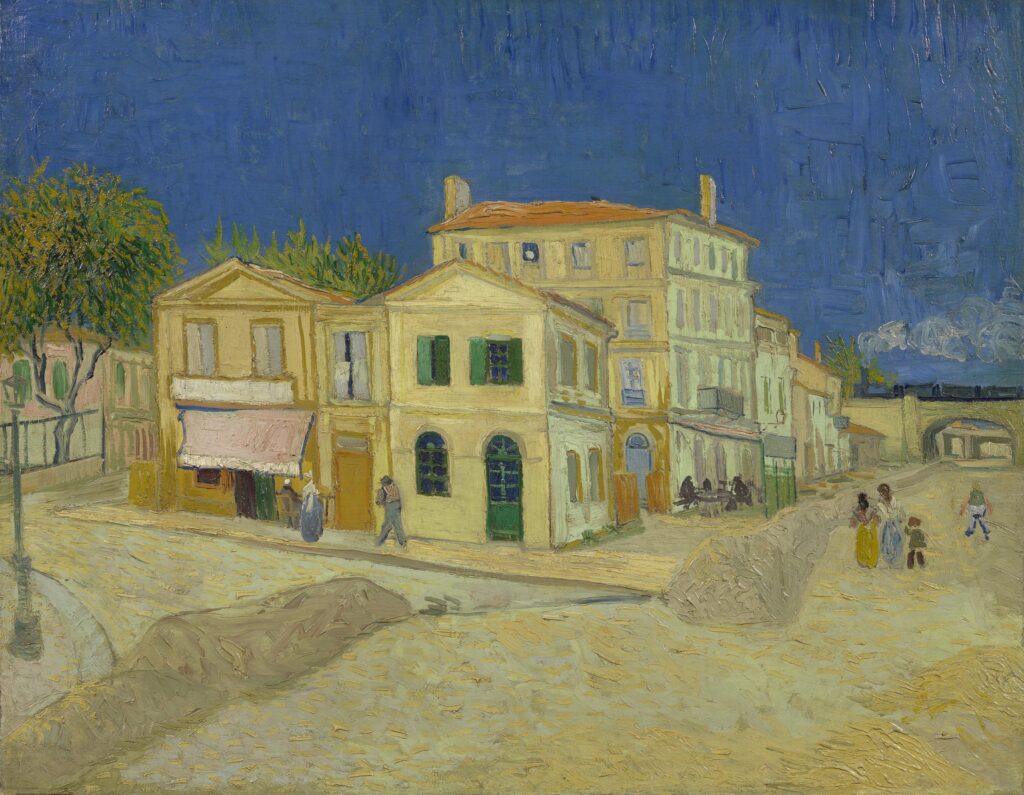
He imagined the house as the center of a new artistic community where painters could live and work together. Van Gogh dreamed of creating a group of artists who would share ideas and inspire each other.
To prepare for guests, he decorated the house with many of his own paintings, including several versions of his famous Sunflowers series.
Although the dream of an artist community never fully materialized, the Yellow House became one of the most symbolic places in Van Gogh’s life.
A Burst of Artistic Creativity
Van Gogh’s time in Arles was extraordinarily productive. During this period, he painted landscapes, portraits, and scenes of everyday life with remarkable energy.
Some of his most famous works were created during this time, including:
- Sunflowers
- Café Terrace at Night
- The Bedroom
- The Night Café
- The Yellow House
His paintings from Arles are known for their bright colors, bold brushstrokes, and emotional intensity.
Van Gogh was especially fascinated by the colors of southern France—the golden sunlight, blue skies, and yellow wheat fields.
The Arrival of Paul Gauguin
Van Gogh hoped to create an artistic partnership with the French painter Paul Gauguin. After months of encouragement, Gauguin finally arrived in Arles in October 1888.
At first, the two artists worked together and exchanged ideas about painting. However, their personalities and artistic approaches were very different.
Van Gogh was emotional and impulsive, while Gauguin was more controlled and analytical. Their relationship soon became tense, and arguments between them became frequent.
Despite these conflicts, their time together influenced both artists’ work.
The Famous Ear Incident
In December 1888, tensions between Van Gogh and Gauguin reached a breaking point.
After a heated argument, Van Gogh experienced a severe mental health crisis. During this episode, he cut off part of his ear.
The exact details of what happened remain debated by historians, but the incident shocked the community in Arles.
Van Gogh was hospitalized afterward, and Gauguin left the town shortly thereafter. The dream of an artistic community in Arles came to an end.
Learn more about why Van Gogh cut off his ear.
Artistic Achievements of the Arles Period
Despite the personal turmoil he experienced, Van Gogh’s time in Arles produced some of the most celebrated paintings in art history.
During his stay, he created more than 200 paintings and drawings.
His works from this period demonstrate:
- Brighter color palettes
- Stronger emotional expression
- More confident brushwork
The vibrant landscapes and everyday scenes he painted in Arles helped define the style that would later make him famous.
Learn more about Van Gogh’s painting style.
The End of His Time in Arles
Following repeated mental health crises, Van Gogh eventually decided to leave Arles.
In 1889, he voluntarily admitted himself to the Saint-Paul-de-Mausole asylum in Saint-Rémy-de-Provence. There he continued painting and created another masterpiece: The Starry Night.
Although Van Gogh’s time in Arles was relatively short, it remains one of the most transformative periods in his artistic career.
Conclusion
Van Gogh’s life in Arles represents both the peak of his artistic creativity and one of the most challenging periods of his life.
In just over a year, he produced some of the most iconic paintings in the history of art while pursuing his dream of an artistic community.
Today, the works he created in Arles—such as Sunflowers, Café Terrace at Night, and The Bedroom—are celebrated as masterpieces that helped shape the future of modern art.
Van Gogh’s time in Arles reminds us that even during periods of struggle, extraordinary creativity can emerge.
A: Van Gogh lived in Arles for approximately 15 months, from February 1888 until May 1889. Despite this relatively short stay, it became the most productive period of his career, during which he created more than 200 paintings and drawings.
A: The Yellow House was a small rented house in Arles with distinctive yellow walls that Van Gogh moved into shortly after arriving in the town. He decorated it with his own paintings — including several versions of Sunflowers — and envisioned it as the center of an artistic community where painters could live and work together. The dream never fully came to fruition, but the house became one of the most symbolic locations in his life.
A: After two years in Paris, Van Gogh felt overwhelmed by the busy city and wanted to find somewhere with stronger sunlight, vivid landscapes, and a slower pace of life. He believed the intense southern light of Arles would inspire a new direction in his painting — and it did, transforming his palette from the darker tones of his early work into the bright, vibrant colors he is now famous for.
A: Van Gogh’s time in Arles produced some of the most celebrated works in art history, including Sunflowers, Café Terrace at Night, The Bedroom, The Night Café, and The Yellow House. These paintings are known for their extraordinarily bright colors, bold brushwork, and emotional intensity.
A: Van Gogh had long hoped to form an artistic partnership with Paul Gauguin and invited him to Arles in October 1888. Initially they worked alongside each other and exchanged artistic ideas, but their very different personalities — Van Gogh emotional and impulsive, Gauguin controlled and analytical — led to frequent arguments. In December 1888, following a severe mental health crisis, Van Gogh cut off part of his ear. Gauguin left Arles shortly after, and the dream of an artists’ community came to an end.