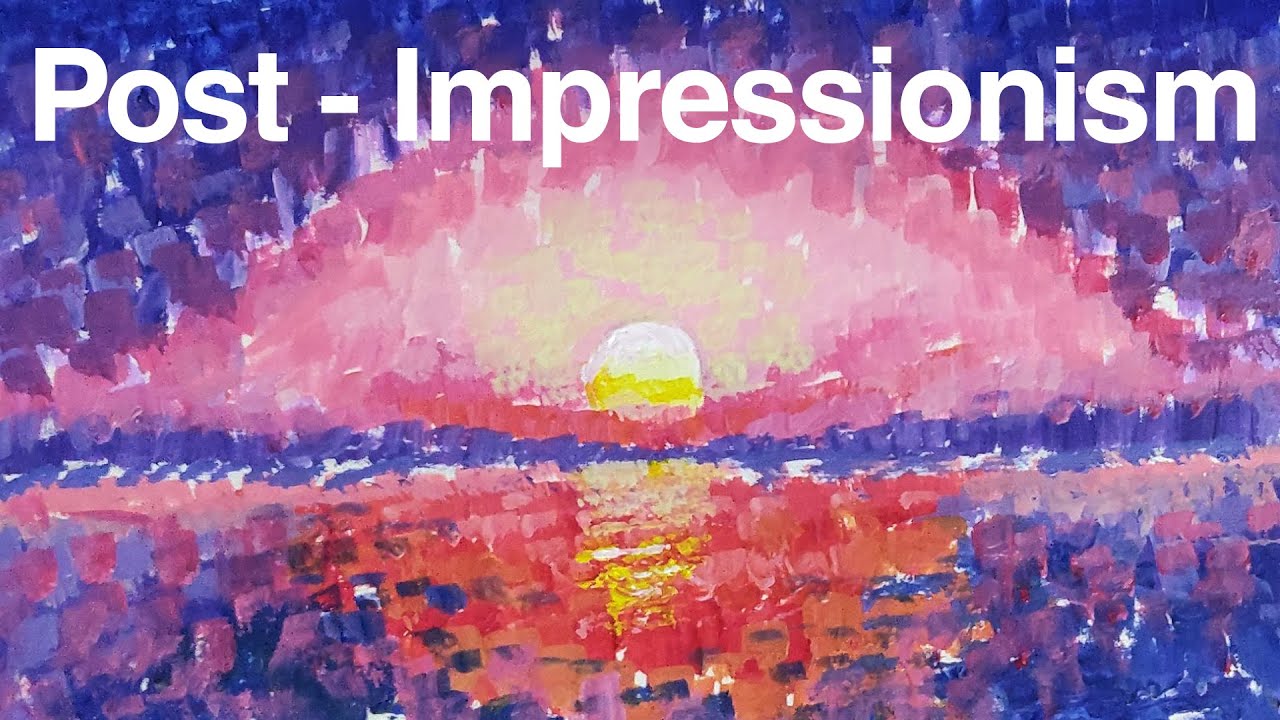
The Art Movement That Changed Modern Painting
Post-Impressionism is an important art movement that developed in the late 19th century as a reaction to Impressionism. While Impressionist artists focused on capturing light and everyday moments, Post-Impressionist artists wanted to go further—exploring emotion, structure, symbolism, and personal expression.
Artists like Vincent van Gogh, Paul Cézanne, Paul Gauguin, and Georges Seurat helped shape this movement, each bringing their own unique style and ideas.
In this article, we’ll explain what Post-Impressionism is, how it differs from Impressionism, and why it is so important in art history.
What Does Post-Impressionism Mean?
The term Post-Impressionism literally means “after Impressionism.”
It refers to a group of artists who were influenced by Impressionism but wanted to move beyond its limitations. Instead of focusing only on light and color, they explored:
- Emotional expression
- Symbolism
- Structure and form
- Personal artistic style
Post-Impressionism is not a single style—it includes a variety of approaches, but all share a desire to create more meaningful and expressive art.
When Did Post-Impressionism Begin?
Post-Impressionism developed between approximately 1886 and 1905.
The movement began when artists started experimenting with new techniques after Impressionism became widely accepted. They wanted to create art that was more expressive, structured, or symbolic.
This period became a bridge between traditional painting and modern art.
Key Characteristics of Post-Impressionism
Although Post-Impressionist artists had different styles, their work often shared several key features:
1. Bold and Expressive Colors
Artists used strong, vibrant colors not just to represent reality, but to express emotion.
2. Visible Brushstrokes
Like Impressionists, they used visible brushstrokes, but often in more dramatic and expressive ways.
3. Focus on Emotion and Symbolism
Instead of simply capturing a scene, artists tried to convey feelings, ideas, or deeper meaning.
4. Experimentation with Form and Structure
Some artists focused on breaking down objects into geometric shapes or creating new ways of seeing perspective.
Famous Post-Impressionist Artists
Vincent van Gogh
Van Gogh is one of the most famous Post-Impressionist artists. His paintings, such as The Starry Night, are known for:
- Swirling brushstrokes
- Intense colors
- Emotional depth
Learn more about The Starry Night
Paul Cézanne
Cézanne focused on structure and form. He often painted landscapes and still lifes using geometric shapes, which later influenced Cubism.
Paul Gauguin
Gauguin used bold colors and symbolic imagery. His paintings often depict scenes from Tahiti and explore themes of spirituality and culture.
Georges Seurat
Seurat developed a technique called Pointillism, where small dots of color are used to create an image.
How Post-Impressionism Is Different from Impressionism
| Impressionism | Post-Impressionism |
|---|---|
| Focus on light and movement | Focus on emotion and meaning |
| Natural colors | Bold, symbolic colors |
| Real-life scenes | Stylized or symbolic scenes |
| Loose compositions | More structure and experimentation |
Post-Impressionism built on Impressionism but added depth, emotion, and artistic individuality.
Why Post-Impressionism Is Important
Post-Impressionism played a key role in the development of modern art.
It influenced major art movements such as:
- Expressionism
- Cubism
- Fauvism
Artists were no longer limited to representing reality—they could express their inner thoughts and emotions through their work.
Connection to Van Gogh
Vincent van Gogh is one of the most important figures in Post-Impressionism.
His paintings, including:
demonstrate the movement’s focus on color, emotion, and expressive brushwork.
Van Gogh’s style helped pave the way for modern art and continues to inspire artists today.
Conclusion
Post-Impressionism was a major turning point in art history. By moving beyond the limitations of Impressionism, artists created works that were more expressive, symbolic, and innovative.
Through bold colors, unique techniques, and emotional depth, Post-Impressionist artists like Vincent van Gogh changed the direction of art forever.